Edu Innovations Changing the World
Education has always been a catalyst for progress, yet today it is evolving with unprecedented speed. The rise of world changing education demonstrates how creative ideas, technological breakthroughs, and global collaboration are reshaping the way people learn. What once took decades to transform can now shift in a matter of years, creating an era where adaptability and innovation are the foundations of growth.

The Power of World Changing Education
At its core, world changing education is about more than textbooks and exams. It is the deliberate use of knowledge, technology, and creativity to address the challenges of our age. Education now goes beyond equipping students for careers. It prepares them to solve global problems, from climate change to inequality, while still nurturing individual passions and talents.
This transformation shows that learning is not limited to classrooms. Online platforms, immersive simulations, and cross-cultural exchanges allow learners to connect with ideas and communities far beyond their geographic borders. The world itself becomes a classroom, encouraging learners to think globally while acting locally.
Education Global Innovations Driving Change
The influence of education global innovations can be seen in nearly every corner of society. Artificial intelligence tutors, adaptive learning systems, and personalized dashboards give students resources tailored to their unique needs. Virtual reality allows learners to experience ancient civilizations, explore scientific phenomena, or simulate medical procedures in ways that were unimaginable a generation ago.
These innovations democratize access to quality education. A student in a remote village can access the same lessons as one in a metropolitan hub. Language barriers are reduced through real-time translation tools, while data-driven insights help teachers refine methods to match evolving student needs. Education becomes more inclusive, more engaging, and more aligned with the realities of modern life.
Transform Learning Methods for a Dynamic Era
The ability to transform learning methods is perhaps the most striking change in this era of innovation. Traditional lectures and rote memorization are giving way to collaborative projects, inquiry-based exploration, and creative problem-solving activities. Learners no longer passively consume knowledge, they actively construct it.
In practice, this might mean coding challenges where students develop solutions to real-world issues or collaborative debates that sharpen critical thinking. Experiential learning, internships, and project-based tasks link theory to practice, ensuring knowledge is not only absorbed but applied. By transforming methods, education nurtures resilience, adaptability, and an enduring love of discovery.
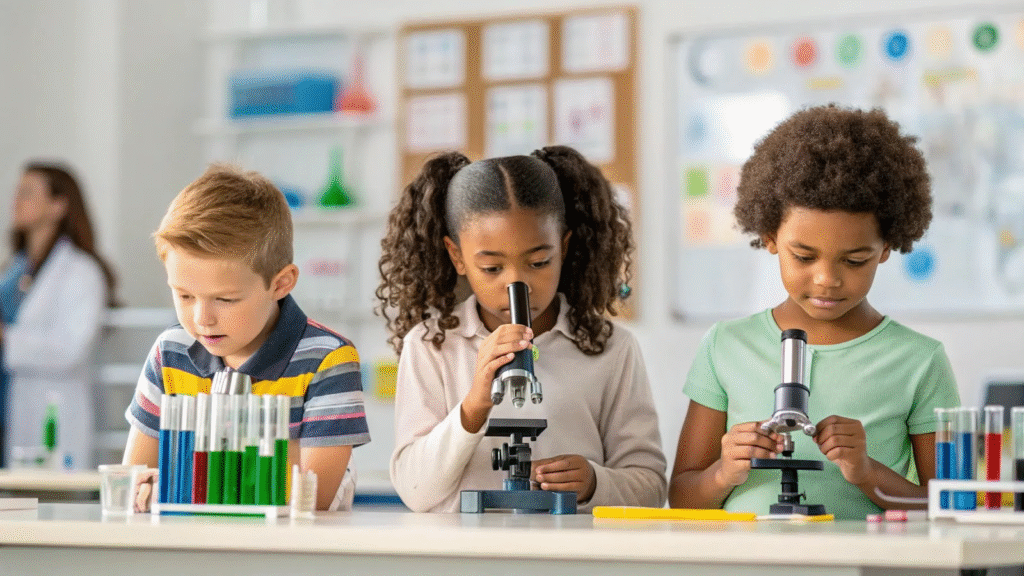
The beauty of this evolution lies in its versatility. A learner passionate about science can experiment in digital laboratories. Another focused on arts can engage with global communities to share and refine their creativity. These diverse opportunities ensure education serves every learner’s individuality while still advancing collective knowledge.
Future Ready Education for the Next Generation
To thrive in a rapidly shifting world, future ready education is essential. It is not enough to prepare students for today’s jobs when tomorrow’s industries may look entirely different. Instead, the focus shifts toward equipping learners with transferable skills such as critical thinking, communication, collaboration, and digital literacy.
Future readiness also emphasizes lifelong learning. Education does not stop with graduation but continues through professional development, personal growth, and curiosity-driven exploration. Individuals become agile thinkers who can pivot as industries change, adapt to new technologies, and seize opportunities that emerge from disruption.
An equally important element of future readiness is cultivating values. Ethical reasoning, cultural awareness, and social responsibility ensure learners not only succeed in their careers but also contribute positively to their communities. By merging skills with values, education creates well-rounded individuals who are capable of leading with both competence and compassion.
The Ripple Effect of Educational Innovation
When innovation enters the realm of learning, its impact extends far beyond individual classrooms. Economies benefit from a workforce that is better prepared for complex industries. Communities become more resilient as education fosters inclusivity and problem solving. On a global scale, the sharing of knowledge across borders accelerates progress in science, medicine, and sustainability.
For example, open access resources allow researchers from developing countries to contribute to global solutions. Cross-cultural projects build bridges of understanding in a world often divided by differences. Educational innovations act as ripple makers, sending waves of transformation into every sphere of human endeavor.
Inspiring a Culture of Lifelong Learning
One of the most exciting outcomes of education global innovations is the rise of lifelong learning cultures. People of all ages, from children to retirees, now have access to platforms that encourage ongoing skill building. Whether learning a new language, mastering digital tools, or exploring creative arts, individuals can continually reinvent themselves.
This culture fosters resilience in uncertain times. When industries shift, lifelong learners pivot with ease. When technology advances, they adapt rather than resist. It is this mindset of continuous growth that truly embodies the promise of future ready education.
Conclusion
Education today is undergoing a profound renaissance. With world changing education leading the way, classrooms expand beyond walls, and learners are empowered to think globally while acting with purpose. Education global innovations are unlocking opportunities once thought impossible, while efforts to transform learning methods are redefining how knowledge is absorbed and applied.